
Introduction: Learning about markets and social movements
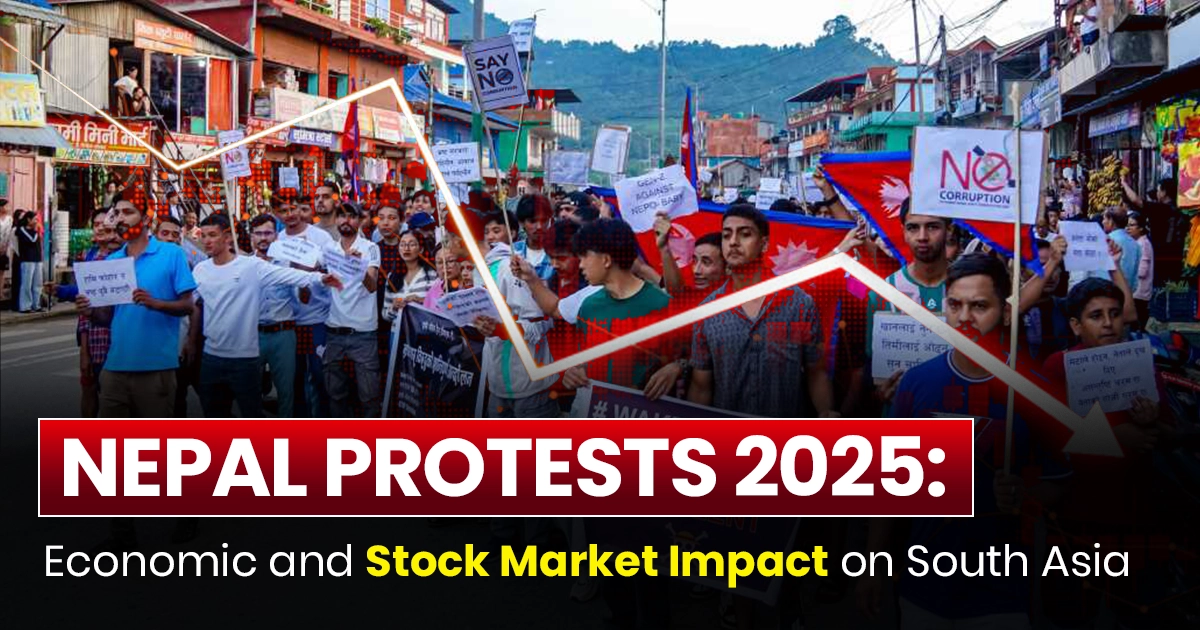
In September 2025, there were a lot of protests in Nepal, mostly led by young people. Many people think of protests as only political events, but they are really social and economic expressions of public opinion. When a lot of people come together to demand change, it's usually about governance, opportunities, or development.
Protests are a sign of uncertainty when it comes to money. And in markets, uncertainty often means that prices change quickly over short periods of time. Even if the basics of an economy stay the same, the way people think about risk affects how tourists, investors, and businesses act.
These protests are important for Nepal, which has a small but strategically important economy. Trade, energy, and remittances connect the country to India in a big way. It also works with China and Bangladesh on trade and building things. Because of this, changes in Nepal's economy affect those of its neighbours and draw the attention of investors from around the world.
This article gives a thorough, professional look at what protests mean, how they affect NEPSE (Nepal Stock Exchange) and Nepal's economy, and how they affect trade flows and GDP in South Asia as a whole.
What a protest is and why it matters for the economy
A protest is a public gathering where people voice their opinions, demands, or unhappiness. Protests are often talked about in political terms, but they are also very much about money.
Businesses may have trouble with their daily operations when large groups get together. Tourism slows down when people don't feel safe or peaceful. Investors are being careful and not making any new commitments until things are clearer. Markets don't mind change; they just don't like not knowing what's going to happen. Protests are a time of uncertainty.
Protests are also a sign of a society that is changing, which is important. They show that people are interested and want things to get better. Over time, this kind of civic energy can lead to changes that make government stronger, make things clearer, and make the economy more stable. So, while protests can cause problems in the short term, they can lead to long-term improvements if they are followed by changes to policies that are helpful.
Nepal's economy is what the protests are based on.
To see how protests affect the market, you need to first look at how Nepal's economy works.
More than 25% of Nepal's GDP comes from workers living abroad, which makes it a remittance-driven economy. These steady inflows make banking liquidity and household spending very strong. Protests don't directly stop remittances, but they can change how banks and families use that money in the short term, making them save more and invest less.
Tourism is another important part of GDP, and people come to Nepal to hike, learn about its history, and have fun. Tourism adds almost 7% directly and 15% indirectly to GDP. Protests make people less likely to travel, which can hurt hotels, airlines, and local businesses.
Long-term strengths include agriculture and hydropower. Nepal has a lot of potential for hydropower, and a lot of it is developed with India's help. These projects can handle short-term unrest, but investors might put off making decisions until things settle down.
India is the main player in trade, sending oil, medicine, and other goods to other countries. China is becoming more and more important in infrastructure, but it's still a secondary role. Nepal's financial stability is closely linked to India's because the Nepali Rupee is pegged to the Indian Rupee.
So, the economy shows why protests in Nepal are more than just a local problem; they affect the whole region.
Effect on the Nepal Stock Exchange (NEPSE)
The Nepal Stock Exchange (NEPSE) shows how people in Nepal feel about investing. There are more than 230 companies listed, and banking, insurance, and hydropower stocks make up most of its structure.
When there are protests, liquidity tends to go down. Most daily traders are retail investors, and they start to be careful. Banks and insurance companies are seeing less business. The index may go down a little, but not because companies lose value overnight. It's just that people aren't as sure of themselves right now.
At the same time, hydropower and energy companies often stay strong. Because their projects are long-term and depend on cooperation between India and Nepal, they are less affected by daily unrest. Remittance-backed banking liquidity also stops big drops in the market, which is not the case in countries where foreign investors are in charge.
It's clear that there will be short-term caution, then stabilisation, and finally recovery once the protests are over. During these times, NEPSE often gives long-term investors a chance to buy shares that are worth less than they are.
- How protests affect economies and markets Nepal's experience is not unique around the world. Protests have had an impact on economies and markets all over the world.
- In Sri Lanka in 2022, the stock market crashed during mass protests over the economy. It then quickly recovered after reforms and support from the IMF were secured.
- Protests in Bangkok in 2010 hurt airlines and hotels by cutting tourism by almost 30%.
- After demonetization in India in 2016, protests caused short-term instability in the banking and consumer sectors, but the market stayed strong in the long run.
These examples show that markets don't like uncertainty, but they do like stability once things become clear again. Nepal follows the same pattern.
Effect on Nepal's GDP: Gross Domestic Product (GDP) is a measure of how much money all the goods and services produced are worth.
- In the short term, GDP growth may slow down because foreign tourists are putting off their trips and businesses are holding back.
- Remittances and agriculture help keep things from getting too bad in the medium term.
- If protests lead to changes in government and more jobs for young people, GDP growth could get stronger in the long run.
So, the effect on GDP is only temporary and can be handled as long as stability is restored.
Effects on the GDP and economies of nearby countries
Because Nepal's economy is so closely linked to those of its neighbours, protests spread.
India
India is Nepal's biggest trading partner, and the two countries do billions of dollars in trade every year. Indian FMCG, pharmaceutical, and logistics companies are all affected by any drop in demand from Nepal. There may also be less demand for flights between Indian cities and Kathmandu. India's big economy can handle these shocks well in terms of GDP, but border states that trade with India may feel the effects for a short time.
Bhutan
Tourism and hydropower are important to Bhutan's economy, just like they are to Nepal's. Confidence among investors in the Himalayan region is linked. If things are uncertain in Nepal, foreign investors may also be cautious about investing in Bhutan.
Bangladesh
Bangladesh and Nepal work together on regional trade and energy projects. If Nepal's infrastructure development takes longer than expected, it could slow down cooperation, which would hurt Bangladesh's plans to diversify its energy sources.
China
Under the Belt and Road Initiative, China has put a lot of money into building roads and other infrastructure. Protests don't directly lower China's GDP, but they can affect strategic choices and the speed of investment.
In short, Nepal's protests change the way people think about the economy in South Asia, even though the GDP numbers of bigger neighbours stay the same.
Looking Ahead: Ways to Move Forward
Nepal's economy could go in three different directions in the future:
- Quick Fix: Things get stable again soon, NEPSE goes up, and tourism comes back. The trend line for GDP growth starts up again.
- Uncertainty lasts a long time: investors put off making decisions, tourism takes longer to come back, and growth slows down for a while.
- Constructive Reform: Protests lead to changes in policy that make governance better and set the stage for stronger long-term growth.
The most likely outcome is a mix of caution and recovery, since Nepal's basic things like remittances, trade, and hydropower are still strong.
Answers for Nepal and the Area
To move forward, Nepal needs to improve governance, help young people find jobs, and make the economy more open. These steps will make investors feel better and keep growth steady.
To solve the problem in South Asia, people need to work together more. More trade deals between India and Nepal, better border logistics, and more regional energy projects under SAARC and BIMSTEC will all make the region stronger.
Discipline and diversification are the keys to success for investors. Instead of getting upset, think about long-term areas like banking, energy, and infrastructure. History shows that being patient pays off in the market.
Comparing Case Studies: How Markets Bounce Back After Shocks 2015 Earthquake in Nepal
At first, tourism fell apart, but rebuilding brought the economy back to life in two years. NEPSE went back up as construction and aid made money more available.
- The NEPSE fell sharply during the COVID-19 crisis in 2020, but it bounced back faster than expected, thanks to remittances and strong banking liquidity.
- Sri Lanka's 2022 crisis: Major protests led to the market crashing, but after a year of reforms, the Colombo Stock Exchange bounced back.
- Lesson: Even big problems don't last forever. Markets and GDP bounce back when things become clear and reforms happen.
Investor Tips and Tricks
The most important thing for Indian and regional investors to remember is that psychology affects markets as much as fundamentals. Protests might not hurt GDP or company profits, but they do change how investors act.
The best plan is to keep your investments spread out across different sectors and regions.
- Don't sell in a panic when the market is unstable.
- Keep an eye on NEPSE, remittance flows, and trade data between India and Nepal.
- Once things settle down, look for chances in sectors that aren't getting enough attention.
- This is how investors can turn uncertainty into long-term profits.
Conclusion: Be careful in the short term and strong in the long term.
The protests in Nepal in 2025 show how social movements can affect economies and markets in other countries. They are both a challenge and an opportunity for Nepal. They are a challenge because they temporarily slow down tourism and markets, but they are also an opportunity because they can lead to reforms that improve governance and make investors feel more secure.
The message for India and its neighbours is that shared growth depends on stability in the region. GDP has little effect on things outside of Nepal, but feelings in South Asia are linked.
The bottom line for investors is clear: be careful in the short term and strong in the long term. NEPSE may go up and down, but remittances, hydropower, and trade between India and Nepal will help it get back on track. Investors can turn uncertainty into opportunity by staying disciplined and looking ahead.
Frequently Asked Questions (FAQs)
Q1. How do the protests in Nepal affect the stock market?
The protests make NEPSE (Nepal Stock Exchange) very volatile in the short term, especially for stocks in banking and insurance. But the market usually comes back when things settle down, thanks to remittances and hydropower projects.
Q2. Do the protests in Nepal have an effect on Indian investors?
Yes, but not directly. Industries like aviation, FMCG, logistics, and banking that have ties to Nepal may see short-term effects. But Indian markets are still pretty strong because they are big and diverse.
Q3. Will the protests have an effect on Nepal's GDP?
Yes, in the short term, GDP growth may slow because of lower tourism income and trade activity that is more cautious. Remittances and agriculture help the economy in the short term, and reforms in the long term could even make growth stronger.
Q4. What effect do Nepal's protests have on countries nearby?
Protests in Nepal affect India, Bhutan, Bangladesh, and China by changing how investors feel and slowing down trade or energy projects in the region. The direct effect on GDP in larger neighbouring countries is small, but the way people in the region think about things is connected.
Q5. Is NEPSE safe for people who want to invest for a long time?
Yes. Even though the market is volatile in the short term, remittance-backed liquidity and hydropower investments keep NEPSE stable. Long-term investors often see protests as a chance to buy stocks at a low price.
Q6. What should investors do while things are bad in Nepal?
Investors should keep their portfolios diverse, not sell in a panic, and keep an eye on trade between India and Nepal. History shows that markets bounce back after reforms and stability returns, which is good for disciplined strategies.
Q7. Will the protests in Nepal lead to changes in the economy of the region?
Yes. Protests can lead to better governance, more jobs for young people, and more open trade deals if they are handled well. This will help Nepal and South Asia grow in the long run.