
What Happened Recently in the Stock Market and Why It Matters
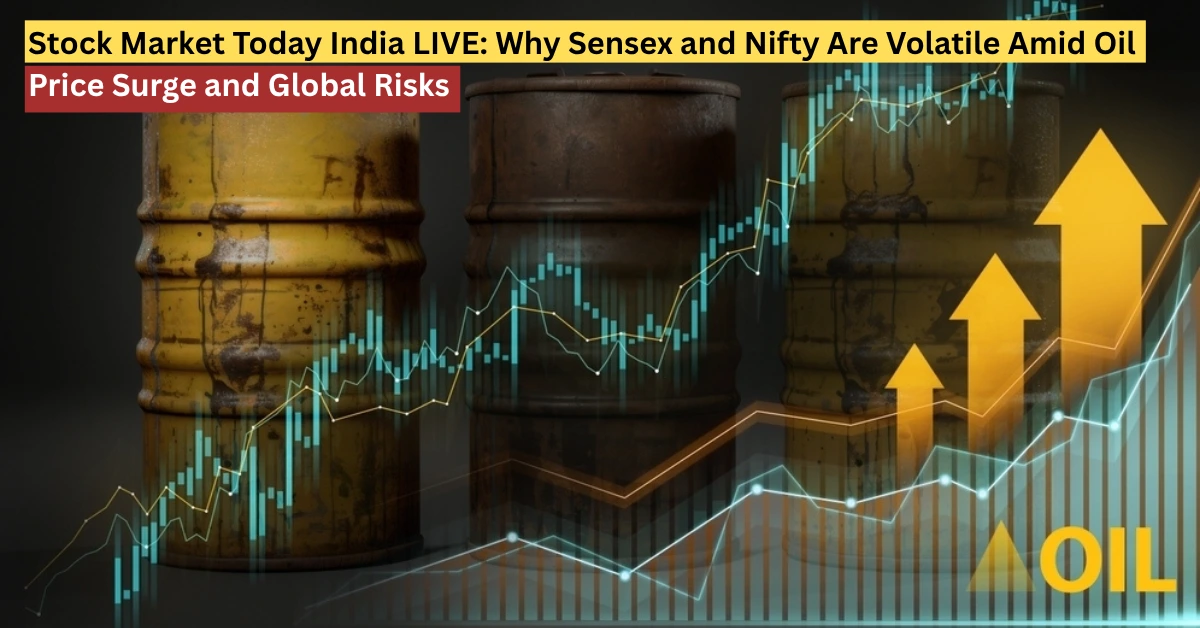
In recent trading sessions, the Indian equity market witnessed a sharp shift in sentiment. The Sensex and Nifty declined significantly earlier in the week, reflecting one of the strongest corrections in recent times. This fall was largely triggered by a rise in crude oil prices, continued foreign investor selling, and increasing global uncertainty.
The correction wasn't caused by weak domestic fundamentals; it was caused by external macro pressures. When oil prices went up and global risks went up, investors became more cautious, which led to less activity and more volatility. Although the market has shown signs of recovery after this decline, the underlying tone remains sensitive and reactive.
This phase has transitioned the market from a momentum-driven environment to one that is macro-focused and risk-aware, where external developments are shaping direction.
Why Stock Market Today Is Being Driven by Oil Prices, Energy Supply Risk and Global Developments
At present, the Indian market is being influenced primarily by developments in global energy markets. Crude oil is trading in an elevated range, and even moderate increases are enough to affect inflation expectations in an import-dependent economy like India.
Fuel prices have already been adjusted, with petrol increasing by more than ₹2 per litre, reflecting the direct transmission of global oil trends into the domestic economy. The rupee is still under pressure, and foreign institutional investors are still cutting back on their investments, which limits the strength of the recovery.
There is another worry about global energy supply routes. Rising transportation costs and uncertainty are making oil prices more risky. These routes are important because they carry a lot of the world's oil supply. Even small problems can affect prices and people's feelings.
Market Snapshot (Present Conditions)
| Indicator | Current Range | What It Indicates |
| Sensex | 74,200 – 74,600 | Recovery with resistance |
| Nifty 50 | 23,000 – 23,150 | Consolidation zone |
| Crude Oil | $95 – $105 | Elevated, inflation-sensitive |
| Rupee (USD/INR) | 92 – 93 | Import cost pressure |
| Petrol Price | +₹2/litre | Inflation signal |
| FII Activity | Selling trend | Upside capped |
How the Emerging Energy Situation Is Adding Structural Risk to the Market
Beyond price movement, the market is now reacting to a deeper structural concern related to energy supply. Reports of increased costs on critical oil transit routes suggest that global supply chains may become more expensive and less predictable.
This makes India's economy more sensitive in the long term because it relies heavily on imported energy. Not only is oil getting more expensive, but the supply is also becoming less certain and harder to keep up with.
Another important issue has to do with the supply of LPG. There are more places where crude oil can be found than there are places where LPG can be found. India gets a lot of its LPG from the Middle East, so problems there can directly affect how much is available and how much it costs in India.
This expands the impact beyond markets into inflation, household costs, and economic stability.
How Oil Prices, FII Selling and Sector Rotation Are Impacting Sensex and Nifty
The current market structure is being shaped by oil prices, foreign investors, and sector rotation all working together. Businesses that depend on fuel, like aviation, paints, and oil-related businesses, are under pressure because costs are going up and margins are a worry.
At the same time, continued FII selling is limiting strong upside momentum, keeping the market within a range. Even during recovery periods, the lack of strong institutional buying is holding back rallies.
However, defensive sectors such as IT and pharmaceuticals are showing relative stability. These segments are attracting selective interest due to their lower exposure to commodity price volatility, indicating a defensive shift in market positioning.
Sector Positioning (Current Trend)
| Sector | Direction | Reason |
| Oil-linked sectors | Under pressure | Rising input costs |
| Aviation | Weak | Fuel expense increase |
| FMCG | Mild pressure | Inflation impact |
| Paints | Weak | Crude-linked materials |
| IT | Stable | Defensive allocation |
| Pharma | Stable | Lower cost sensitivity |
What Are the Advantages and Risks in the Current Market Environment
The current state of the market shows a balance between risk and reward. Even though volatility has gone up, it has also made entry levels more reasonable and macro signals clearer.
Pros and Cons Overview
| Aspect | Advantage | Risk |
| Recent Correction | Better valuations | Continued volatility |
| Oil Price Trends | Clear macro direction | Inflation pressure |
| Sector Rotation | Stability in defensive sectors | Weak consumption sectors |
| Investor Behavior | More disciplined positioning | Reduced risk appetite |
| Global Linkage | Transparency in drivers | External dependency |
This shows that the market is adjusting rather than weakening, with both opportunities and risks coexisting.
How Traders and Investors Should Approach the Market Now
The current environment is news-driven and macro-sensitive, where movements depend on oil prices, global cues, and currency trends rather than internal growth alone.
This market isn't trending strongly for traders. A structured approach that takes levels and risk management into account works better than positioning aggressively. In this phase, investors should use gradual allocation and selective exposure.
Strategy View (Current Approach)
| Factor | Situation | Approach |
| Market Trend | Sideways | Avoid chasing momentum |
| Key Driver | Oil and global cues | Monitor closely |
| Risk Level | Elevated | Maintain discipline |
| Trading Style | Short-term | Focus on levels |
| Investment Style | Uncertain phase | Gradual allocation |