
What Has Happened Before During Stock Market Crashes?
When investors want to know why the stock market is going down today, the answer is often something that is happening around the world. In the past, big changes in the Indian stock market have been caused by events outside of India rather than problems at home.
During the pandemic of 2020, there was a lot of selling in the markets because people were unsure about the state of the economies. A similar trend appeared during the 2022 geopolitical crisis, when rising commodity prices and global instability led to sharp declines in Sensex and Nifty 50.
In both situations, FII selling in India played a key role. Global investors reduced exposure to emerging markets and shifted capital toward safer assets. The current phase stands out because the scale of FII outflow in 2026 is even higher, indicating a faster and stronger reaction.
What Is Happening in the Indian Stock Market Today?
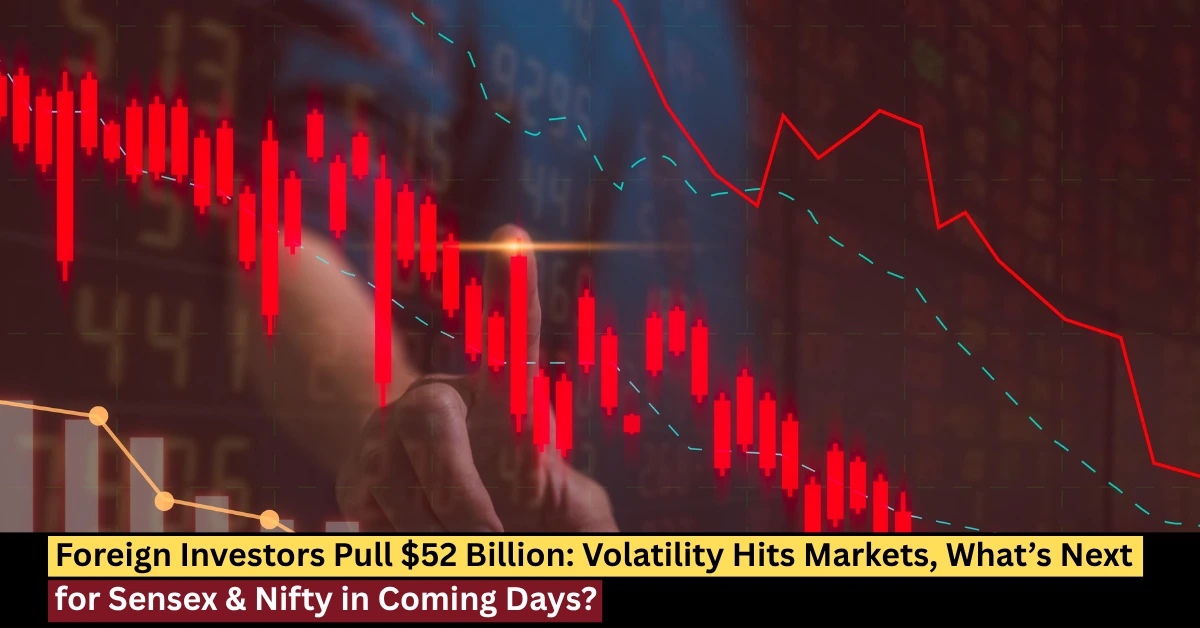
Right now, the stock market today in India is witnessing strong pressure due to continued foreign selling. Nearly $52 billion has been withdrawn from Asian emerging markets, and India is among the most affected.
This is visible in Sensex today and Nifty today movements, where markets are showing volatility and weak recovery attempts. Many participants are questioning whether this is just a correction or the beginning of a broader stock market crash in 2026.
The key point is that markets are currently reacting more to global developments than domestic fundamentals, making price movement more unpredictable.
Why Is the Stock Market Falling Today in India?
The main reason the market is going down today is because of global risk factors. Increasing geopolitical tension, especially with Iran, has made financial markets more uncertain.
At the same time, the price of crude oil is going up, which has a direct effect on India. Since the economy relies on imports, higher oil prices put more pressure on inflation and make the economy less stable overall.
Another big reason is FII selling India, which is when foreign investors keep taking money out of the country. In addition, global capital is moving to markets that are safer and stronger.
These things are putting pressure on Sensex and Nifty today, which is making them unstable and making people feel cautious.
How Is Oil Risk Impacting the Stock Market Today?
A key area of concern is the Strait of Hormuz, through which nearly 80% of Asia’s crude oil supply flows.
Any disruption in this route can push oil prices higher, which directly impacts the Indian stock market. Rising oil prices increase costs, weaken the currency, and affect corporate performance.
This is why crude oil movement is currently one of the most important factors influencing stock market today India and overall investor sentiment.
Who Is Most Affected by This Market Fall?
Countries like India, Taiwan, and South Korea are facing the strongest impact. These economies rely significantly on imported energy and are intricately connected to global trade.
In India, this is reflected in increased volatility across sectors. The ongoing FII outflow from India is adding pressure, especially in sectors sensitive to global developments.
This shows how global capital flows have a direct effect on the Indian stock market today, even when things are stable at home.
What Do the Numbers Say About This Market Crash?
A comparison with previous events highlights the seriousness of the current situation:
| Event / Period | Capital Outflow | Market Impact |
| March 2026 (Current) | $52 Billion | High volatility in Sensex and Nifty |
| 2020 Pandemic Crash | ~$49 Billion | Global market decline |
| June 2022 Crisis | ~$48 Billion+ | Commodity-driven correction |
The data shows that the current FII selling trend is among the strongest seen in recent years.
What Happens Next for Sensex and Nifty?
Looking ahead, the direction of the stock market tomorrow in India will depend on global developments. In the short term, markets are likely to remain volatile and sensitive to news related to oil prices and geopolitical conditions.
A slow recovery in the Nifty may start in 2026 if things get back to normal. But if things stay unclear, markets may stay under pressure for a longer time.
This isn't just a short-term correction; it's a bigger change in how the global market works.
What Are the Pros and Cons of This Market Situation?
This part of the stock market has both problems and chances. There are clear risks on one side. There is still a lot of uncertainty because markets are reacting to events around the world that are still changing. As FII selling continues, it is putting pressure on liquidity and sentiment. At the same time, rising volatility is causing prices to move sharply and unpredictably. These things make it hard to figure out which way the market is going in the short term.
There is another side to this situation, though. After a time of strong growth, market corrections usually bring valuations closer to what they really are. In the long run, this can make a stronger base for future growth when conditions around the world get better.
The key takeaway is that while risks such as uncertainty, FII outflows, and volatility dominate the current phase, these periods also reshape market structure and set the stage for the next cycle.
How Can You Better Understand Market Moves Like This?
When things like big outflows of money from other countries, rising crude oil prices, and tensions around the world affect the stock market today, the movement is not random. Institutional activity, macroeconomic factors, and the structure of the market all play a role in it.
During these times, it is important to understand things like how FIIs act, derivatives, and how to manage risk. These are things that happen in real financial markets, especially when things get more unstable.
For those looking to build a deeper understanding of how global factors influence markets, learning frameworks aligned with the ICFM India and the NISM certification exam can provide structured clarity on market behaviour.
This approach focuses on understanding why markets move, rather than reacting only to price changes.
Conclusion: Is This a Temporary Fall or a Bigger Market Shift?
The current situation in the Indian stock market reflects more than just a temporary decline. With over $52 billion already withdrawn, it indicates a broader shift in global capital allocation.
Things like FII selling, crude oil prices, and geopolitical tension are having a big impact on the direction of the market. Markets are likely to stay volatile and sensitive as long as these things keep happening.
In the next few months, we'll have to wait and see how things change around the world to see if this turns into a bigger correction or stays the same.
Disclaimer: This article is for informational purposes only and not investment advice. Financial markets involve risk; please consult a qualified advisor before making decisions.
FAQs: Foreign Investors Outflow, Stock Market Fall & What Next
Why is the stock market falling today in India?
The stock market is going down today because of a lot of foreign investors selling, rising crude oil prices, and uncertainty around the world. Sensex and Nifty are becoming more volatile because of large amounts of money leaving Asian markets.
What is FII selling and how does it impact the market?
Foreign institutional investors (FIIs) selling means that they are taking money out of the stock market. When FIIs sell a lot, liquidity goes down and market sentiment gets worse, which can cause indices like Sensex and Nifty to go down.
Why are foreign investors pulling money out of India in 2026?
Foreign investors are cutting back on their investments because of global risks like rising oil prices, geopolitical tensions, and stronger currencies around the world. In the short term, these things make emerging markets a little more risky.
How do crude oil prices affect the Indian stock market?
When crude oil prices go up, it costs India more to buy things from other countries. This can cause inflation and pressure on the currency. This hurts companies' profits and makes investors feel bad, which usually makes the stock market go down.
Will Sensex and Nifty recover after this fall?
The market will only recover if the world is stable, especially oil prices and events in the world of politics. If things get better, the markets may slowly settle down, but short-term volatility is likely to stay.
Is this a stock market crash or just a correction?
Right now, it looks like a strong correction caused by events around the world. But if outflows and uncertainty keep happening, it could last longer and go into a deeper market phase.
What should investors understand during market volatility?
During volatile phases, markets are influenced more by global events than domestic factors. Understanding capital flows, risk management, and market behaviour becomes important rather than reacting to short-term price movements.
Which sectors are most affected during FII outflows?
Sectors such as banking, financial services, and export-oriented industries are generally more susceptible to foreign investor activities and global trends.
What role does the Strait of Hormuz play in current market conditions?
The Strait of Hormuz is a key route for global oil supply. Any disruption here can push oil prices higher, which impacts inflation, currency stability, and overall market sentiment in countries like India.
What factors should be tracked to understand market direction now?
Key factors include foreign investor activity, crude oil prices, global geopolitical developments, and currency movement. These elements are currently driving market direction more than domestic factors