

The Ultimate Guide to VWAP for Day Traders
The VWAP (Volume Weighted Average Price) is a simple and effective indicator that stands out in the world of stock market trading, especially intraday trading. If you know how to use VWAP, it can help you make better decisions about when to enter and exit trades, no matter how new or experienced you are.
This blog will explain everything you need to know about VWAP, including how it works, why it's important, and how to use it well in real market situations.
What does VWAP mean?
Volume Weighted Average Price is what VWAP stands for. It shows the average price at which a stock has traded during the day, taking into account both price and volume.
VWAP is different from a simple moving average because it gives more weight to prices where there was a lot of trading. This makes it a better representation of the stock's "true price" during the day.
To put it simply:
Buyers are in charge if the price is above VWAP.
If the price is lower than VWAP, sellers are in charge.
Formula for VWAP
To find VWAP, use this formula:
VWAP = (Cumulative (Price × Volume)) / Cumulative Volume
Where:
The price is usually the average of the High, Low, and Close (HLC/3).
Volume is the number of shares that changed hands.
This calculation happens all the time during the trading session, so VWAP is always up to date.
Why is VWAP so important?
A lot of people use VWAP:
Traders in stores
Traders in institutions
Traders who use algorithms
This is why it is so strong:
1. Finds the fair value
VWAP is a price that serves as a benchmark. Institutions often try to buy below VWAP and sell above it to get better execution.
2. Shows the trend in the market
Price above VWAP means an uptrend.
Price below VWAP means a downtrend.
3. Aids in Getting In and Out
VWAP makes it easy to tell when to start or end a trade.
Different kinds of VWAP
1. VWAP for the day
Starts when the market opens
Ends when the market closes
Every day it starts over.
2. VWAP with an anchor
Starts at a certain point, like a news event or a breakout.
For swing and positional trading
How to Trade with VWAP
Let's get down to business now. The best VWAP trading strategies are:
1. VWAP Trend Strategy
This is the easiest and most common strategy.
Buy Setup:
Price is higher than VWAP
Pullback toward VWAP
Confirmation of a bullish candle
Set up to sell:
Price is below VWAP
Pullback toward VWAP
Bearish candle confirmation This strategy works best when the market is going in one direction.
2. The VWAP Bounce Strategy
VWAP works like moving support and resistance.
VWAP acts as support when the price is going up.
When the market is going down, VWAP acts as resistance.
Traders want the price to "bounce" off of VWAP.
3. The VWAP breakout plan
A strong break of VWAP with volume can mean that the trend is about to change.
For example:
The price was lower than VWAP.
Breaks above VWAP with a lot of volume
Buyers get the momentum
4. The VWAP and Moving Average Strategy
Use VWAP and moving averages together, like the 9 EMA or 20 EMA:
VWAP confirms the trend
EMA lets you get in early
This mix makes things more accurate.
VWAP vs. Moving Average
VWAP and Moving Average are both features.
Based on AmountYes No
Reset every day: Yes or No
Best for: Intraday, Swing/Positional
High Accuracy Moderate
VWAP is better for day trading because it takes volume into account.
Benefits of VWAP
Simple to understand
Works well for trading during the day
Used by businesses
Helps find trends and fair value
Lessens emotional trading
VWAP's Limits
Not good for trading over a long period of time
Lags when things move quickly
Works best when used with other indicators
Not as useful in sideways markets
VWAP Tips for Pros
Don't trade right at VWAP.
Wait for proof
Use with sound
Volume confirms VWAP signals.
Trade in markets that are going up or down
VWAP works best when the trend is clear.
Combine with price movement
Patterns in candlesticks make things more accurate.
An example of a real market (conceptual)
Think about a stock that starts at ₹100 and goes up with a lot of volume. VWAP slowly goes up.
Price stays above VWAP → Strong bullish trend
A pullback near VWAP means it's time to buy.
Price bounces → Trade confirmation
This is how professional traders use VWAP in real life.
Who Should Use VWAP?
VWAP is best for:
Traders during the day
Scalpers
Traders who use algorithms
Traders from institutions
VWAP is easy to use but powerful, so even beginners can start using it.
Final Thoughts
VWAP is more than just an indicator; it's a whole way to trade. It helps traders figure out which way the market is really going, find trades with a high chance of success, and make better trades.
You should definitely include VWAP in your trading system if you are serious about day trading. But it shouldn't be used alone, like any other tool. For the best results, use it with price action, volume analysis, and good risk management.
In the end:
"The market respects volume, and VWAP does a great job of showing that."
Begin using VWAP on charts, watch how it works, and slowly become more comfortable using it for real trading.
VWAP Indicator Explained: Best Intraday Trading Strategy for Consistent Profits

Comments
Related posts

Learn to recognise the difference between a trending and a sideways market with simple, practical signs on the charts before ....
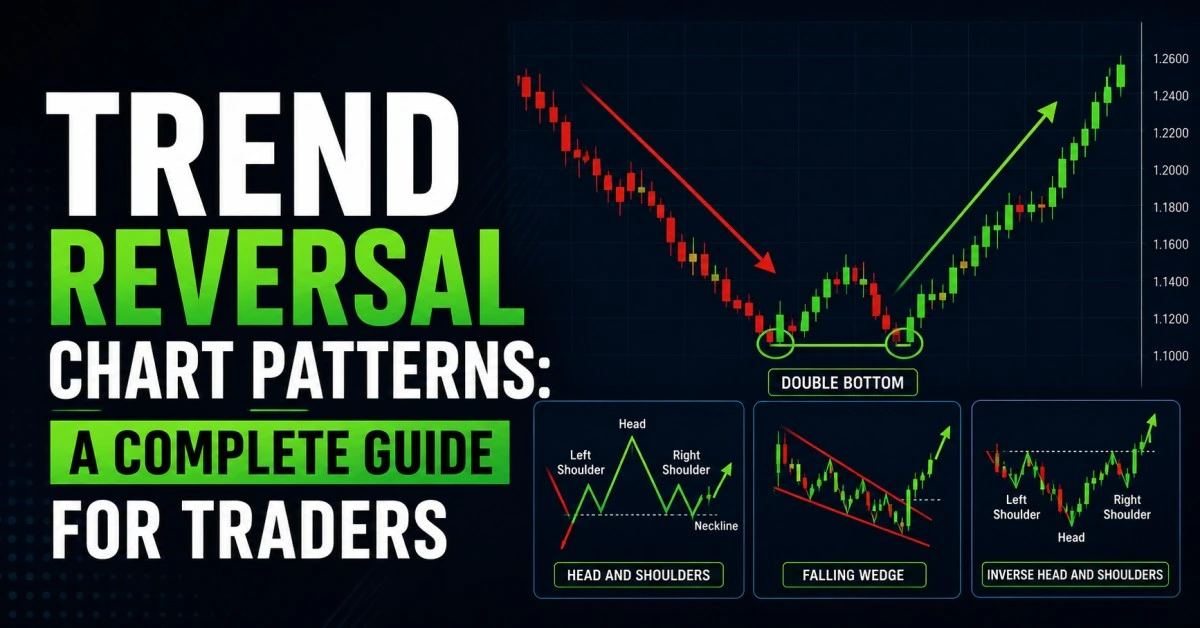
In the stock market, identifying the right trend at the right time can make a huge difference in trading success. ....
Learn about the TEMA Indicator (Triple Exponential Moving Average), including its formula, advantages, strategies, settings, and how traders use it ....
In trading, one of the most persistent challenges is identifying the direction of the market and staying aligned with it. ....
In the fast-moving world of financial markets, traders constantly search for tools that can bring clarity to price action. One ....